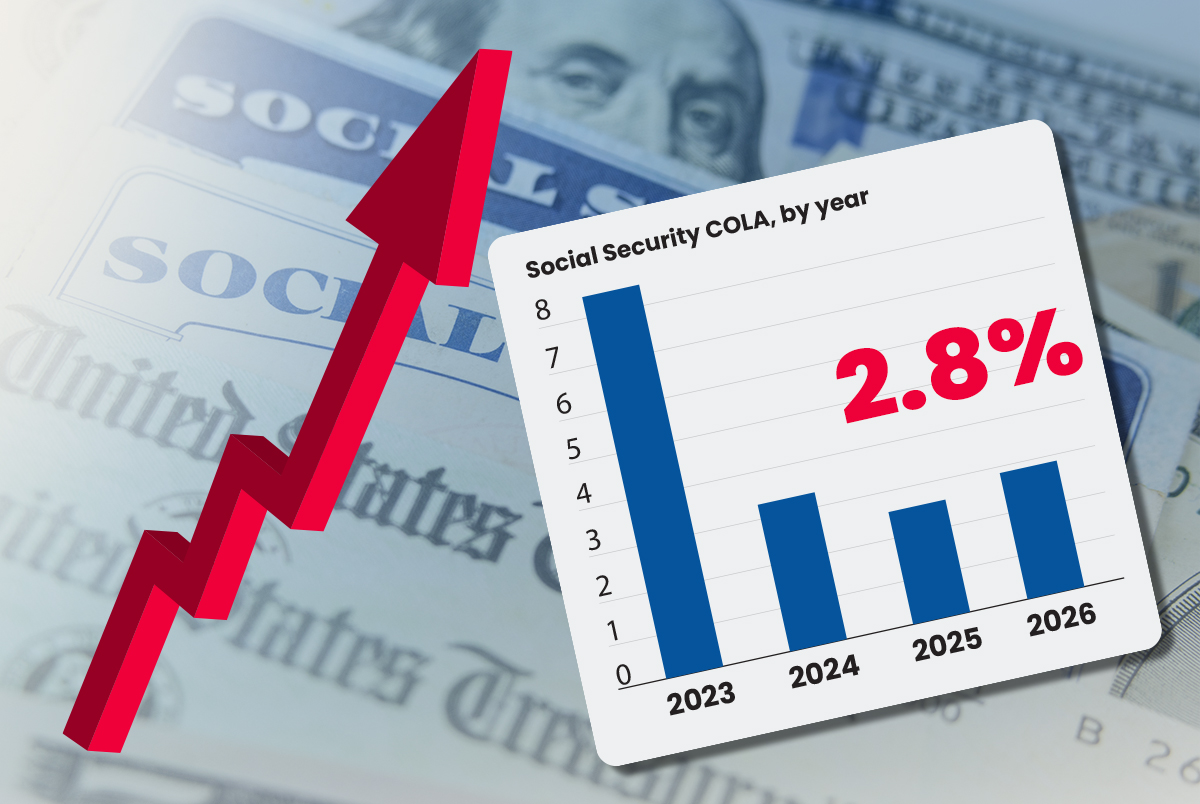
Millions of Americans started 2026 with slightly larger Social Security checks after the U.S. government approved a 2.8% Cost-of-Living Adjustment (COLA). The increase was created to help retirees, disabled Americans, survivors, and Supplemental Security Income (SSI) recipients keep up with rising prices for food, housing, healthcare, transportation, and everyday living expenses.
For many seniors living on fixed incomes, even a small increase can make a meaningful difference.
The Social Security Administration announced that the 2.8% COLA became effective beginning January 2026. Average monthly retirement benefits increased by approximately $56 per month for many retirees.
Why Did Social Security Increase?
Every year, the federal government reviews inflation using the Consumer Price Index for Urban Wage Earners and Clerical Workers (CPI‑W). When prices rise nationwide, Social Security payments may also increase.
The 2026 adjustment was smaller than some recent years but still important because inflation continued affecting:
- Grocery prices
- Rent and housing
- Prescription medications
- Utility bills
- Transportation costs
- Insurance premiums
The goal of COLA is to protect the buying power of retirees and beneficiaries.
Average Social Security Benefit Changes in 2026
Here are estimated average monthly benefit increases:
| Type of Beneficiary | Average Monthly Increase |
|---|---|
| Retired Worker | About $56 more |
| Elderly Couple | Around $90 more combined |
| Disabled Worker | Around $45–$50 more |
| SSI Individual | Increased to about $994 max |
| SSI Couple | Increased to about $1,491 max |
While the increase helps, many retirees say healthcare and housing costs are still rising faster than benefits.
State-by-State Impact of Social Security in 2026
Although Social Security is a federal program, the impact feels different in every state because living costs, taxes, housing prices, and healthcare expenses vary widely.
California
Retirees in California continue facing some of the highest housing costs in America. While Social Security checks increased, many seniors say the extra money mainly goes toward rent, utilities, and medical costs.
Good news for retirees: California does not tax Social Security benefits.
Florida
Florida remains one of the most popular retirement destinations because there is no state income tax. Seniors in cities like Miami, Tampa, and Orlando benefit from keeping more of their monthly checks.
However, homeowners insurance and healthcare costs continue rising.
Texas
Texas retirees also benefit from no state income tax. Many seniors relocating from expensive states continue choosing Texas for lower living costs.
But property taxes in some areas remain a concern for retirees on fixed incomes.
New York
New York retirees saw the same 2.8% increase, but living costs remain among the highest in the nation.
Many seniors in New York City say groceries, rent, and transportation expenses continue stretching retirement budgets.
New York does not tax Social Security benefits.
Pennsylvania
Pennsylvania is considered relatively retirement-friendly because Social Security income is not taxed.
Lower housing costs in many communities help retirees make their benefits stretch further compared to larger metropolitan areas.
Illinois
Illinois retirees also avoid state taxes on Social Security income. Many older Americans consider the state affordable outside Chicago metropolitan areas.
Healthcare access remains an important issue for rural seniors.
Arizona
Arizona continues attracting retirees because of warm weather and relatively lower costs compared to coastal states.
The COLA increase helps seniors deal with rising utility bills during extreme summer temperatures.
Nevada
Nevada has no state income tax, making it attractive for retirees.
However, rapid population growth has increased housing costs in cities like Las Vegas and Reno.
North Carolina
North Carolina has become a growing retirement destination due to moderate living costs and expanding healthcare systems.
Many retirees say the 2026 increase helps with food and prescription expenses.
South Carolina
South Carolina offers tax advantages for retirees and lower living costs than many northeastern states.
Retirement communities continue expanding throughout the state.
Georgia
Georgia provides retirement tax deductions for many seniors, helping them keep more of their Social Security income.
Suburban and rural areas remain more affordable than many larger U.S. cities.
Michigan
Michigan retirees face cold winters and increasing heating costs. The COLA increase helps many seniors manage utility bills and food prices.
Retirement communities near lakeside regions remain popular.
Ohio
Ohio continues offering moderate living costs for retirees.
Many seniors report that healthcare affordability remains one of their biggest concerns despite the benefit increase.
Tennessee
Tennessee remains attractive because it has no state income tax.
Retirees moving from northern states continue fueling population growth in cities and suburban areas.
Washington
Washington state retirees benefit from no state income tax, but housing prices in Seattle and nearby regions remain very expensive.
Many seniors rely heavily on annual COLA increases to maintain financial stability.
Colorado
Colorado retirees enjoy active lifestyles and scenic communities, but rising property values and housing costs continue affecting older adults.
Mountain communities can be especially expensive for fixed-income retirees.
Alabama
Alabama remains relatively affordable for retirees, especially in smaller towns.
Lower housing costs help many seniors stretch Social Security income further.
Louisiana
Louisiana seniors continue facing higher insurance costs and weather-related concerns.
Many retirees depend heavily on Social Security as their primary source of income.
States That Still Tax Some Social Security Benefits
Most states do not tax Social Security income, but a few states still may tax benefits depending on income level.
These states include:
- Colorado
- Connecticut
- Minnesota
- Montana
- New Mexico
- Rhode Island
- Utah
- Vermont
- West Virginia
Some of these states are gradually reducing or eliminating taxes on Social Security benefits.
What Retirees Are Saying in 2026
Across the country, reactions to the increase are mixed.
Some retirees appreciate the additional money each month, especially those living mostly on Social Security income.
Others say inflation continues outpacing benefit increases, particularly for:
- Rent
- Healthcare
- Prescription drugs
- Long-term care
- Insurance premiums
Many seniors say Medicare premium increases reduce part of the benefit gain.
Maximum Social Security Benefits in 2026
Workers who waited until age 70 to claim benefits may receive significantly higher monthly payments.
Estimated maximum monthly benefits:
| Claiming Age | Maximum Monthly Benefit |
| Age 62 | Lower reduced benefit |
| Full Retirement Age | Around mid-range maximum |
| Age 70 | More than $5,000 monthly possible |
Waiting longer generally increases monthly checks permanently.
Future Concerns About Social Security
Experts continue discussing the long-term future of Social Security.
Key concerns include:
- Aging population
- Fewer workers paying payroll taxes
- Rising retirement numbers
- Trust fund projections
Lawmakers continue debating possible future reforms, including:
- Raising payroll tax limits
- Adjusting retirement ages
- Modifying benefits for high earners
- Expanding revenue sources
Despite concerns, Social Security remains one of the most important financial programs in the United States.
Final Thoughts
The 2.8% Social Security increase in 2026 provides important financial relief for millions of Americans. While the extra money may not fully offset rising living costs, it helps retirees, disabled workers, survivors, and low-income seniors manage everyday expenses.
For many families, Social Security is more than a monthly payment.
It is security, stability, and peace of mind after decades of hard work.
As inflation and economic uncertainty continue, millions of Americans will keep watching closely for future updates to Social Security benefits.