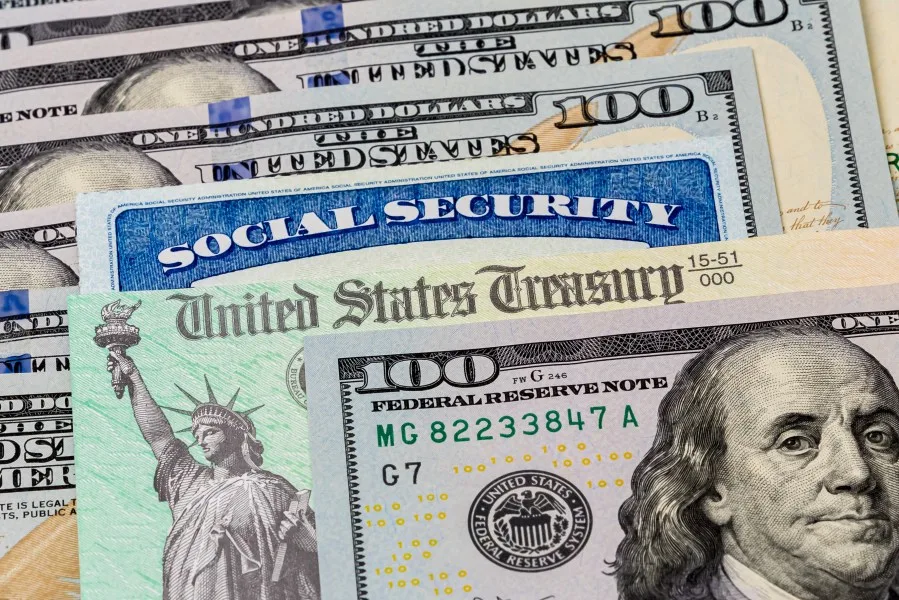
The 2.8% Raise — A Story Across America
As of the end of May 2026, U.S. Social Security benefits increased by 2.8% because of the 2026 Cost-of-Living Adjustment (COLA).
By the end of May 2026, headlines across the United States carried the same announcement:
“U.S. Social Security benefits increased by 2.8% under the 2026 Cost-of-Living Adjustment (COLA).”
Many Americans wondered the same question:
Was the increase based on a specific state?
The answer was no.
The 2.8% increase was not based on any single state like California, Texas, or Florida. Instead, the federal government calculated the increase using nationwide inflation data collected across the entire United States.
The adjustment came from measurements tied to the Consumer Price Index for Urban Wage Earners and Clerical Workers, often called CPI-W. Economists used national price data — including food, gasoline, housing, transportation, and medical costs — to determine how much living expenses had increased for ordinary Americans.
That national calculation became the official 2026 COLA increase:
2.8%.
The rule applied equally across every state.
Whether a retiree lived in busy New York City, rural Kansas farmland, sunny Florida beaches, or mountain towns in Colorado, the percentage increase remained the same.
But the impact felt very different depending on where people lived.
In San Francisco, seventy-year-old retired librarian Eleanor Park stared at her rent notice while watching the evening news discuss the COLA increase.
“Two point eight percent,” the anchor said cheerfully.
Eleanor sighed.
In California, housing prices and grocery costs had risen far faster than 2.8%. Her apartment rent alone increased nearly twice that amount during the year. The higher Social Security payment helped, but only slightly.
“It disappears before I even touch it,” she told her neighbor.
Meanwhile, in a quiet town in Iowa, retired mechanic Harold Jensen felt differently.
His mortgage had already been paid off years earlier. Local prices had risen more slowly than in large coastal cities. When his Social Security payment increased, he actually noticed the difference.
For Harold, the extra money meant he could finally repair his old pickup truck before winter arrived.
“It’s not huge,” he said, “but it helps.”
The contrast revealed an important truth about America in 2026:
The COLA percentage was national, but the real cost of living was local.
A retiree in Mississippi might stretch a Social Security check much further than someone living in Hawaii or California, where housing and everyday expenses were dramatically higher.
Still, the federal government did not create different Social Security percentages for different states. Every recipient received the same 2.8% adjustment regardless of location.
Inside the headquarters of the Social Security Administration in Washington, economists defended the system.
They explained that Social Security was designed as a federal nationwide program, not a state-by-state payment system. The annual COLA adjustment protected recipients from inflation on a national level, even though local realities varied greatly.
Critics argued that seniors in expensive states were falling behind.
Supporters replied that creating fifty separate state-level Social Security formulas would become politically and financially chaotic.
The debate continued in Congress, television studios, and retirement communities across America.
In Miami, Maria Alvarez used her increased payment to help pay for air conditioning during the brutal summer heat.
In Detroit, former factory worker Leonard Brooks spent the extra money on prescription medicine.
In Seattle, retired teacher Anna Cho quietly added the extra dollars into savings because rising rent worried her.
Same percentage.
Different realities.
By the end of May 2026, millions of Americans had learned an important lesson about Social Security:
The 2.8% increase belonged to the entire country, not one state.
But while the formula was national, its meaning changed from household to household.
For some, it was a small cushion.
For others, it barely kept pace with rising prices.
And for many elderly Americans living month to month, it was the difference between fear and stability.
In the end, the COLA adjustment was more than economics.
It was a reminder that behind every percentage point stood real people — each living a different version of the American experience.